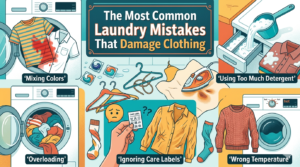
The Most Common Laundry Mistakes That Damage Clothing
You invest significant money into your wardrobe. Whether it is a perfectly tailored dress shirt, a premium pair of selvedge denim, or high-end performance activewear, these garments are an extension of your personal style and professional image. Yet, many of the most severe threats to your clothing do not come from environmental stains or everyday wear—they happen directly inside your laundry room.
Many standard household laundry habits are fundamentally destructive to modern textiles. From chemical oversaturation to improper mechanical settings, small daily oversights slowly ruin your favorite garments.
As textile and fabric care specialists, we analyze laundry through chemical engineering and fiber physics. Below, we break down the most common laundry mistakes that permanently damage clothing and explain the science behind how to correct them.
1. Using Too Much Detergent (The Over-Suds Illusion)
The single most widespread misconception in home laundering is that more detergent equals cleaner clothes. It feels intuitive: if your clothes are extra dirty, adding an extra capful of liquid detergent should provide extra cleaning power.
In reality, the exact opposite happens. Modern washing machines—particularly high-efficiency (HE) front-loaders—use very small amounts of water. When you add too much detergent, the machine cannot thoroughly rinse it out of the fabric weave.
The Hidden Damage:
The Soap Scum Trap: Leftover soap residue leaves a microscopic, tacky film on the surface of your clothes. This film behaves like a magnet, locking in airborne dust, dead skin cells, and environmental odors.
Bacteria Breeding Grounds: This trapped residue pools within the seams, waistbands, and underarms of your garments, becoming a feeding ground for anaerobic bacteria. Over time, this leads to a sour, musty smell that reactivates the moment the fabric is warmed by your body heat.
Skin Irritation: For those with sensitive skin, surfactant buildup in your clothing causes contact dermatitis, redness, and chronic itching.
The Fix: Cut your detergent usage in half. For a standard load of laundry in an HE machine, you rarely need more than two tablespoons of liquid detergent.
2. Pouring Fabric Softener on Everything
Fabric softeners are heavily marketed as an essential step for soft, fresh-smelling laundry. However, from a textile science perspective, standard fabric softeners are incredibly destructive to contemporary clothing.
Fabric softeners work by depositing a thin, slick coating of silicone or tallow-based chemical compounds (essentially liquefied animal fats) over the surface of the fibers. While this flattening of the fibers makes a garment feel momentarily softer to the touch, it introduces serious long-term structural issues.
+---------------------+-------------------------------------------------------+
| Garment Type        | Effect of Fabric Softener                             |
+---------------------+-------------------------------------------------------+
| Activewear / Nylon  | Clogs synthetic pores, locks in sweat and bacteria    |
| Bath Towels         | Coats cotton loops in oil, reducing absorption by 30% |
| Denim / Jeans       | Weakens elastane strands, causing bagging and sagging |
| Children's Sleepwear| Chemically strips away mandated flame retardants      |
+---------------------+-------------------------------------------------------+
The Hidden Damage:
Ruined Performance Wear: Synthetic fabrics like polyester and spandex are engineered with moisture-wicking capillary channels to pull sweat away from your skin. Fabric softener fills these channels with oil, permanently destroying the garment’s technical capabilities and sealing in body odor.
Loss of Towel Absorbency: When you coat a bath towel in hydrophobic oil, it loses its ability to absorb water. Over time, your towels become slick, non-absorbent, and permanently musty.
Elastane Failure: The chemicals in softener break down elastic synthetic fibers, causing your jeans, undergarments, and fitted t-shirts to stretch out, lose shape, and look worn out.
The Fix: Ditch commercial fabric softeners entirely. If you want to naturally soften clothes and break down mineral deposits from hard water, add a half-cup of distilled white vinegar to the fabric softener dispenser cycle instead.
3. Selecting the Wrong Temperature and Spin Cycles
It is highly tempting to use a single, universal setting for every load of laundry. Throwing everything into a standard “Normal” cycle with warm water saves time, but it forces completely different textiles to undergo the exact same mechanical stress.
The Hidden Damage:
Thermal Shrinkage: High heat causes natural fibers like wool, cashmere, and structural cottons to constrict. The scales on wool fibers lock together under thermal stress, shrinking a premium sweater by multiple sizes in a single cycle.
Mechanical Stress & Pilling: High-speed spin cycles (such as the ones used for towels or heavy denims) generate extreme centrifugal force. If delicate cottons, silks, or blends are subjected to this, the friction fractures the surface fibrils, resulting in severe pilling and frayed seams.
If you are dealing with delicate evening wear, fine seasonal knits, or luxury structured items, you should bypass the home appliance altogether. Utilizing a professional dry cleaning service removes the physical agitation and water immersion entirely, safely lifting dirt and body oils out of delicate pieces without risking structural shrinkage.
4. Neglecting Basic Garment Preparation
The prep work you do before pressing the start button is just as critical as the detergent you select. Throwing clothes into the drum exactly as you pulled them off your body introduces internal mechanical hazards.
The Hidden Damage:
Open Zippers Acting as Saws: Metal and heavy plastic zippers feature sharp, jagged teeth. When left unzipped in a spinning washing machine drum, those teeth act like a saw blade, snagging knits, ripping lace, and leaving small holes in fine cotton t-shirts.
Unbuttoned Dress Shirts: Leaving the buttons fastened on your dress shirts puts immense leverage on the thread structures during the spin cycle. The force pulls heavily against the buttonhole, warping the placket and causing buttons to snap off prematurely.
Trapped Friction: Washing graphic tees, embroidered hoodies, or dark denim right-side-out forces the premium exterior face of the garment to bear the brunt of the machine’s friction, leading to cracked graphics, fuzzy embroidery, and faded colors.
LAUNDRY PREP CHECKLIST:
[ ] Zip all metal and plastic zippers completely to the top.
[ ] Unbutton all buttons on dress shirt collars, cuffs, and plackets.
[ ] Empty all pockets (pens, coins, and keys cause massive fiber damage).
[ ] Turn graphic tees, dark denim, and knitwear inside out.
5. Overloading the Dryer Drum (The Thermal Bake)
When you are staring down a mountain of laundry, trying to cram an entire week’s worth of clothes into a single dryer cycle is highly relatable. However, an overloaded dryer is incredibly destructive to modern fabrics.
Dryers require ample space for air to circulate freely. When clothes are packed tightly together, they cannot tumble. Instead, they form a massive, wet ball that slowly rotates. The exterior layers are subjected to intense, direct heat from the metal drum while the interior core remains completely wet.
The Hidden Damage:
Baked-In Stains: The extreme heat of a home dryer permanently cooks residual organic oils and proteins into the fabric matrix. If a stain did not completely come out in the wash, drying it ensures it will never come out.
Elasticity Destruction: High dryer heat is public enemy number one for elastane and rubber elastic bands. It fractures the synthetic elastic core, causing waistbands to stretch out and sports bras to lose their support.
Micro-ripping: The weight of an overloaded drum creates extreme pulling tension on damp, vulnerable seams, weakening the sewing threads and leading to sudden blowouts down the line.
Save Your Wardrobe: Delegate to the Fabric Care Professionals
Avoiding every single laundry pitfall requires meticulous sorting, precise measuring, and significant free time. Between checking tags, separating textiles by weight, and hanging delicate items to air-dry, maintaining a premium wardrobe can easily absorb hours of your weekend.
If you want to protect your clothing investments without the stress, let Whisk Laundry Service handle the work. Our highly trained fabric specialists treat your wardrobe with the exact care it deserves.
Through our premium wash and fold laundry services, we precisely sort by color and weight, utilize customized, temperature-controlled water profiles, and use exact detergent ratios to prevent residue buildup. For high-end commercial clients or boutique businesses managing heavy linen rotations, our scalable commercial laundry service delivers flawless results on time, every single time.
Let us handle the technical science of laundry while you reclaim your weekend.