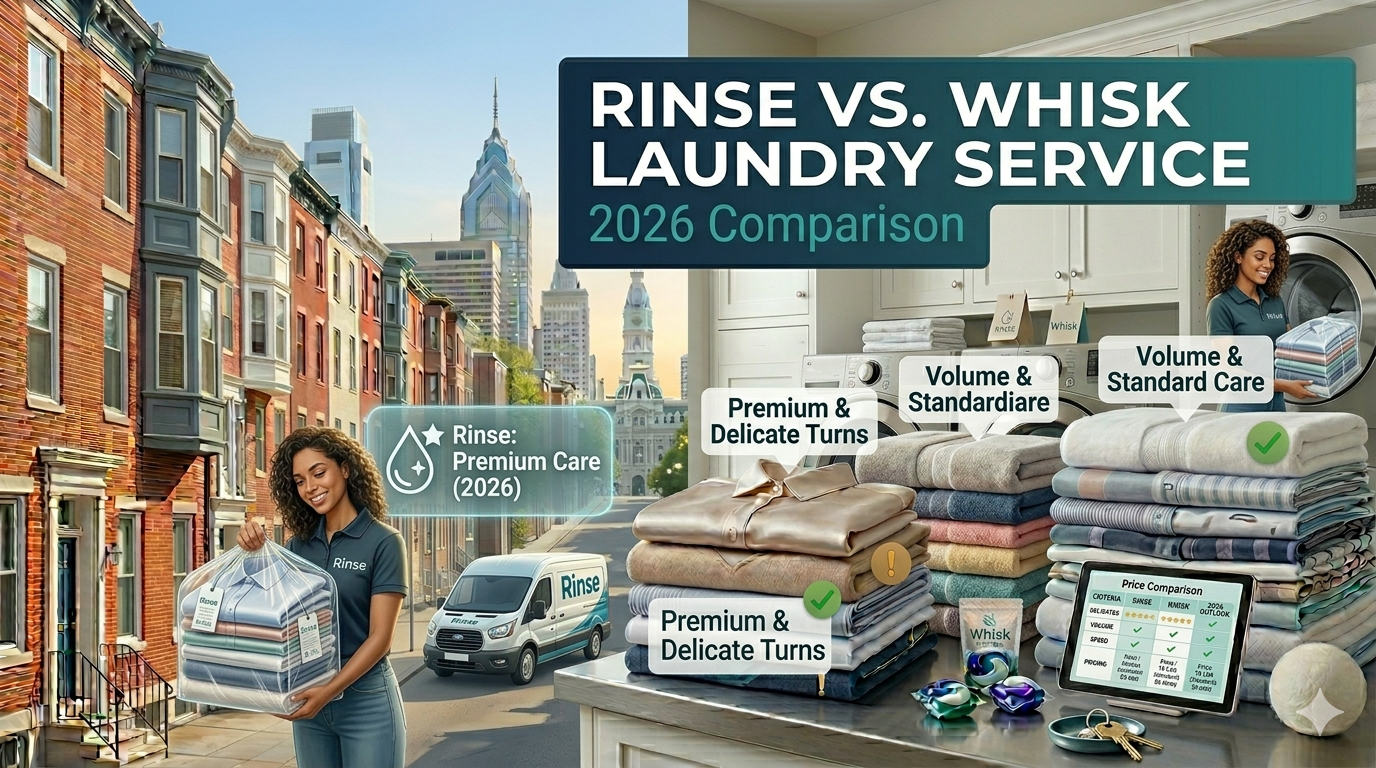
Rinse vs. Whisk Laundry Service: Which is Best for Your Wardrobe? (2026)
The on-demand laundry market has evolved rapidly over the last few years. Consumers are no longer forced to spend their weekends sorting, washing, and folding. Instead, a simple tap on a smartphone can send your weekly laundry out to be professionally cleaned and returned straight to your doorstep.
However, as the industry has scaled, a clear divide has emerged between two distinct operational philosophies. On one hand, you have massive, technology-first national platforms like Rinse. On the other, you have elite multi-regional fabric care specialists like Whisk Laundry.
If you are trying to decide which service to trust with your everyday clothing, premium designer labels, or commercial linens, this detailed technical comparison will break down the differences in pricing models, processing methods, and overall garment preservation.
The Core Operational Difference
Before looking at prices, it is critical to understand where your clothes actually go when they leave your doorstep. This infrastructure gap directly impacts the quality of your wash.
+------------------+-------------------------------------------------------------+
| Feature          | Rinse Laundry                                               |
+------------------+-------------------------------------------------------------+
| Workflow Model   | Centralized Tech App                                        |
| Facility Type    | High-volume automated commercial hubs                       |
| Care Philosophy  | Efficiency-first "Industrial Averaging"                     |
+------------------+-------------------------------------------------------------+

+------------------+-------------------------------------------------------------+
| Feature          | Whisk Laundry                                               |
+------------------+-------------------------------------------------------------+
| Workflow Model   | Elite Multi-Regional Specialist                             |
| Facility Type    | State-of-the-art regional artisan facilities                |
| Care Philosophy  | Precision textile science and individual care               |
+------------------+-------------------------------------------------------------+
Rinse operates as a high-volume logistics layer. They collect your clothes using evening couriers and route them to massive, automated industrial processing facilities.
Whisk Laundry functions as an artisan fabric-care operation. Every single order is kept strictly isolated and processed inside state-of-the-art regional facilities by trained textile technicians who inspect clothing garment-by-garment.
1. Pricing Structure: Flat-Rate Bag vs. Custom Packages
The financial math between these two providers is entirely different. Your choice should depend on how frequently you wash and the weight of your average laundry load.
Rinse Laundry Pricing
Rinse has completely moved away from traditional per-pound pricing for its standard Wash & Fold services, opting entirely for a static per-bag flat rate:
The Flex Bag ($45): Holds roughly 15 pounds of laundry (about one standard basket).
The Full Bag ($75): Accommodates roughly 30+ pounds of laundry.
The Catch: If you don’t completely fill a bag, or if you send a lightweight but bulky item (like a single comforter), you are still hit with the full bag fee. Non-subscription users also face a mandatory $14.95 delivery fee per order.
Whisk Laundry Pricing
Whisk rejects the “one-size-fits-all” bag trap, offering transparent, highly flexible pricing structures tailored to your household or business needs. Whether you need standard care or specialized restoration, you only pay for the exact volume and care requirements of your specific items. There are no surprise flat fees for half-empty bags.
2. Fabric Care: High-Volume Industrial vs. Textile Science
How your clothes are handled inside the machine determines how long they will last. Aggressive, generalized heat and friction can ruin clothing over time.
The Rinse Approach: “Industrial Averaging”
To stay profitable on flat-rate bags, corporate hubs must maximize efficiency. This means clothes sent in standard Rinse bags are often routed through massive commercial machines using automated, highly standardized settings.
Your delicate activewear, premium pima cotton t-shirts, and everyday denim are frequently subjected to the exact same thermal and mechanical cycles. As a result, this aggressive processing can accelerate color fading, destroy fabric elasticity, and cause premature pilling.
The Whisk Approach: Textile Precision
At Whisk, laundry is treated as a science. When an order arrives, technicians perform an individual care-label audit to determine the absolute safest washing parameters:
Weight & Fabric Segregation: Heavy denim is completely separated from fragile delicates to prevent the surface friction that causes mysterious fabric holes.
Chemical and Thermal Control: Cycles are run utilizing precise, cool water profiles to preserve dye integrity and prevent shrinkage. Whisk completely bans cheap commercial softeners that coat fibers in oily residues, using exact surfactant dosing instead.
3. Service Versatility and Business Capability
While both companies offer standard residential convenience, their ability to handle specialized garments and commercial accounts varies significantly.
Rinse Services
Rinse is a solid, straightforward option for standard wardrobes. They offer traditional wash-and-fold alongside per-item dry cleaning and launder-and-press services for business suits or standard button-downs.
Whisk Services
Whisk provides a much deeper, comprehensive multi-disciplinary ecosystem. Beyond their premium wash and fold laundry services, they offer specialized, museum-quality dry cleaning service for elite designer labels and delicate couture.
Furthermore, Whisk features a dedicated, high-capacity commercial division. If you run a local business, vacation rental portfolio, or boutique medical clinic, their scalable commercial laundry service handles heavy stains and rapid turnarounds seamlessly—including specialized tracks like their meticulous tablecloths and linen cleaning service.