How Often Should You Wash Your Clothes? A Practical Guide by Garment Type
We have all been there: you look at a pair of jeans or a sweater you wore for a few hours and wonder, “Does this actually need to go into the hamper, or can it go back in the closet?”
In a world filled with conflicting laundry advice, finding the balance between hygiene and fabric preservation can feel incredibly complicated. Over-washing is the single greatest cause of premature garment wear, leading to faded colors, weakened fibers, and loss of structural shape. On the flip side, under-washing allows body oils, dead skin cells, and microscopic bacteria to accumulate, which permanently degrades premium textiles.
As fabric care experts, we look at clothing maintenance through a lens of textile science and microbiology. This comprehensive guide breaks down exactly how often to wash your wardrobe by garment type, ensuring your clothes stay fresh, structural, and immaculate for years to come.
The Science of Fabric Wear: Why Over-Washing Kills Clothes
Every time a garment goes through a mechanical washing cycle, it undergoes severe physical stress. The combination of water saturation, chemical agitation from detergents, and the friction of fabrics rubbing against one another alters the textile at a microscopic level.
Fiber Degradation: Natural fibers like cotton, wool, and silk swell when wet. Mechanical agitation breaks down the tiny, hair-like fibrils on the yarn surface, leading to pilling and thinning.
Elasticity Loss: Heat and agitation degrade elastane (Spandex or Lycra), the synthetic fiber responsible for stretch in performance wear and skinny jeans. Once elastane snaps, garments permanently lose their shape.
Dye Bleeding: Water acts as a solvent. Frequent exposure to water—especially at incorrect temperatures—leaches dye molecules from the fiber core, causing deep blacks and vibrant colors to look dull and washed out.
The General Rule of Thumb: If a garment does not directly touch your skin’s high-sweat zones (like your underarms) and has no visible stains or odors, air it out on a wooden hanger for 24 hours instead of throwing it straight into the wash.
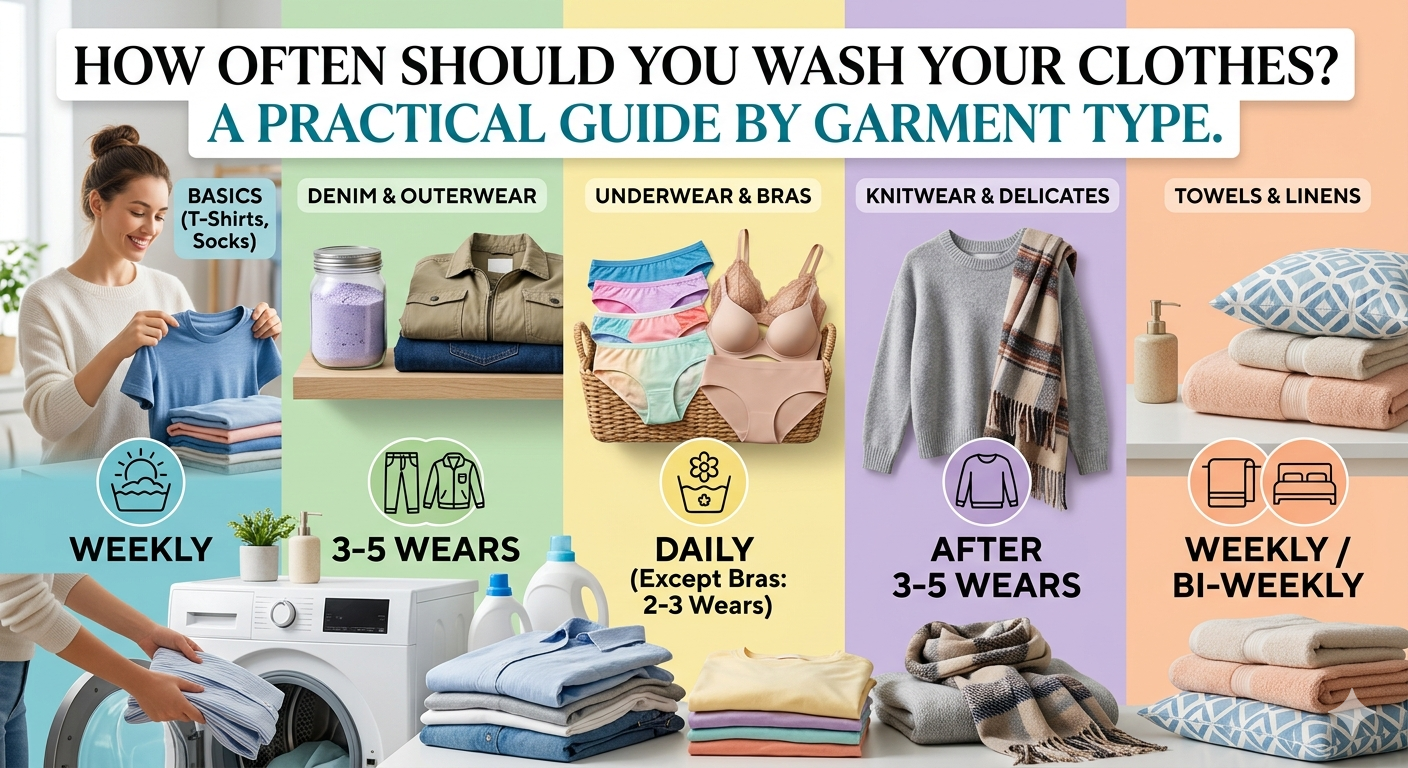
The Definitive Garment Laundry Frequency Blueprint
To maximize the lifespan of your wardrobe, follow this breakdown of laundry frequencies based on textile composition and proximity to the body.
1. Wash After Every Single Wear
These garments sit directly against your skin, absorbing sweat, sebum (body oil), and environmental pollutants. Failing to wash these items immediately creates a breeding ground for bacteria like Staphylococcus aureus, which causes stubborn odors and fabric rot.
Underwear and Socks: Non-negotiable. These textiles absorb the highest concentration of bacteria and moisture.
Activewear and Gym Clothes: Synthetic performance fabrics (polyester, nylon) are highly hydrophobic, meaning they repel water but eagerly attract oils. These oils get trapped in the microscopic crevices of the fiber, leading to “permastink” if left unwashed.
White Clothing: White fabrics easily absorb ambient dust and skin oils. Leaving them unwashed causes these oils to oxidize, resulting in localized yellowing around the collar and underarms.
T-Shirts and Tank Tops: Because they fit closely to the torso and underarms, they quickly accumulate sweat and deodorant residue.
2. Wash After 2 to 3 Wears
These mid-layer items balance skin contact with external exposure. They require regular laundering but can easily withstand a few rotations if worn lightly.
Dress Shirts and Blouses: If you wear an undershirt, you can push a high-quality dress shirt to two wears. However, look closely at the collar and cuffs—if you notice “ring around the collar,” it needs to be laundered immediately to prevent permanent staining.
Dresses and Skirts: Casual daytime dresses can easily handle two to three wears, provided they aren’t exposed to excessive heat or heavy perspiration.
Pajamas and Sleepwear: Your body sheds millions of skin cells every night. Unless you sweat heavily at night, washing your pajamas every three days keeps your sleep environment hygienic.
3. Wash After 5 to 10 Wears
These outer layers or heavy-duty textiles are designed to protect you from the elements or handle rugged use. Washing them too frequently strips away their natural resilience.
Jeans and Denim: True denim enthusiasts know that denim thrives on neglect. Raw and high-quality denim should rarely see a washing machine—ideally every 10 wears, or even longer if they smell fresh. Frequent washing fades the unique indigo dye patterns and ruins the custom fit denim develops over time.
Sweaters and Cardigans: Heavy cotton, acrylic, and polyester blends can go about five wears. Premium natural fibers like cashmere and merino wool naturally repel odors and dirt, meaning they often only need cleaning once or twice a season.
Suits, Blazers, and Trousers: Tailored clothing relies on internal structures like canvas interlinings and shoulder pads. Regular washing completely destroys these elements. Trousers can go 4 to 5 wears, while jackets can comfortably handle up to 10 wears before requiring a professional touch.
Specialized Fabrics That Require Professional Care
Some garments simply aren’t built for standard home appliances. The aggressive agitation of a home washing machine drum can stretch delicate seams, warp fine silks, and shrink luxury wools into doll clothing.
+------------------+-----------------------+-----------------------------+
| Fabric Type      | Ideal Wash Frequency  | Recommended Method          |
+------------------+-----------------------+-----------------------------+
| Silk & Chiffon   | Every 1 to 2 wears    | Dry Cleaning / Hand Wash    |
| Cashmere & Wool  | 1 to 2 times a season | Professional Dry Cleaning   |
| Leather & Suede  | Once per year         | Specialty Leather Clean     |
| Tailored Suits   | Every 4 to 6 wears    | Eco-Friendly Dry Cleaning   |
+------------------+-----------------------+-----------------------------+
When you invest in high-end tailored suits, designer dresses, or luxury winter coats, protecting that investment means bypassing the home laundry room entirely. Utilizing a dedicated dry cleaning service utilizes specialized fluid solvents rather than water, lifting dirt and oils completely out of delicate fibers without disturbing the shape or integrity of the garment.
Similarly, if you are managing delicate linens, heavy formal gowns, or luxury table runners from a special event, opting for a professional tablecloths and linen cleaning service ensures structural preservation that a standard home cycle cannot replicate.
Expert Laundry Tips to Extend Garment Life Between Washes
If you want to stretch the time between laundry days while keeping your wardrobe impeccably fresh, integrate these professional habits into your routine:
Spot-Treat Spills Instantly: Do not throw an entire blouse into the hamper just because of a small drop of coffee. Blot the stain immediately with cold water and a mild surfactant—never rub, which drives the pigment deeper into the weave.
Invest in Fabric Refreshing Sprays: A light mist of an antimicrobial fabric spray or a DIY mixture of cheap vodka and water neutralizes surface odors on jackets and denim without altering the structural fibers.
Always Wash Inside Out: When you do launder your clothes, flip them inside out. This ensures that the physical friction of the wash cycle happens on the inside of the garment, protecting the external face, prints, and colors from fading.
Air Dry Whenever Possible: The high thermal heat of a household dryer is public enemy number one for fabrics. It bakes stains into place, shrinks cottons, and degrades synthetic elastic bands. Hang-drying or flat-drying your clothes keeps them looking brand new.
Take Back Your Time: Let Whisk Handle the Science of Laundry
Tracking fabric types, counting wears, and meticulously sorting delicates from denim takes immense time and energy. If your weekly schedule is already packed, trying to maintain your wardrobe correctly can easily turn into an exhausting second job.
That is where we come in. At Whisk Laundry Service, we have transformed garment care into a science. Our highly trained fabric specialists inspect every care label, precisely sort by textile weight and color, and utilize advanced, temperature-controlled cleaning profiles designed to maximize your wardrobe’s lifespan.
Whether you need your regular wardrobe handled with our premium, time-saving wash and fold laundry services, or your business needs commercial-grade reliability via our commercial laundry service, we treat your textiles with the expert care they deserve. Enjoy beautifully fresh, perfectly pressed clothes dropped off right at your door—without lifting a finger.